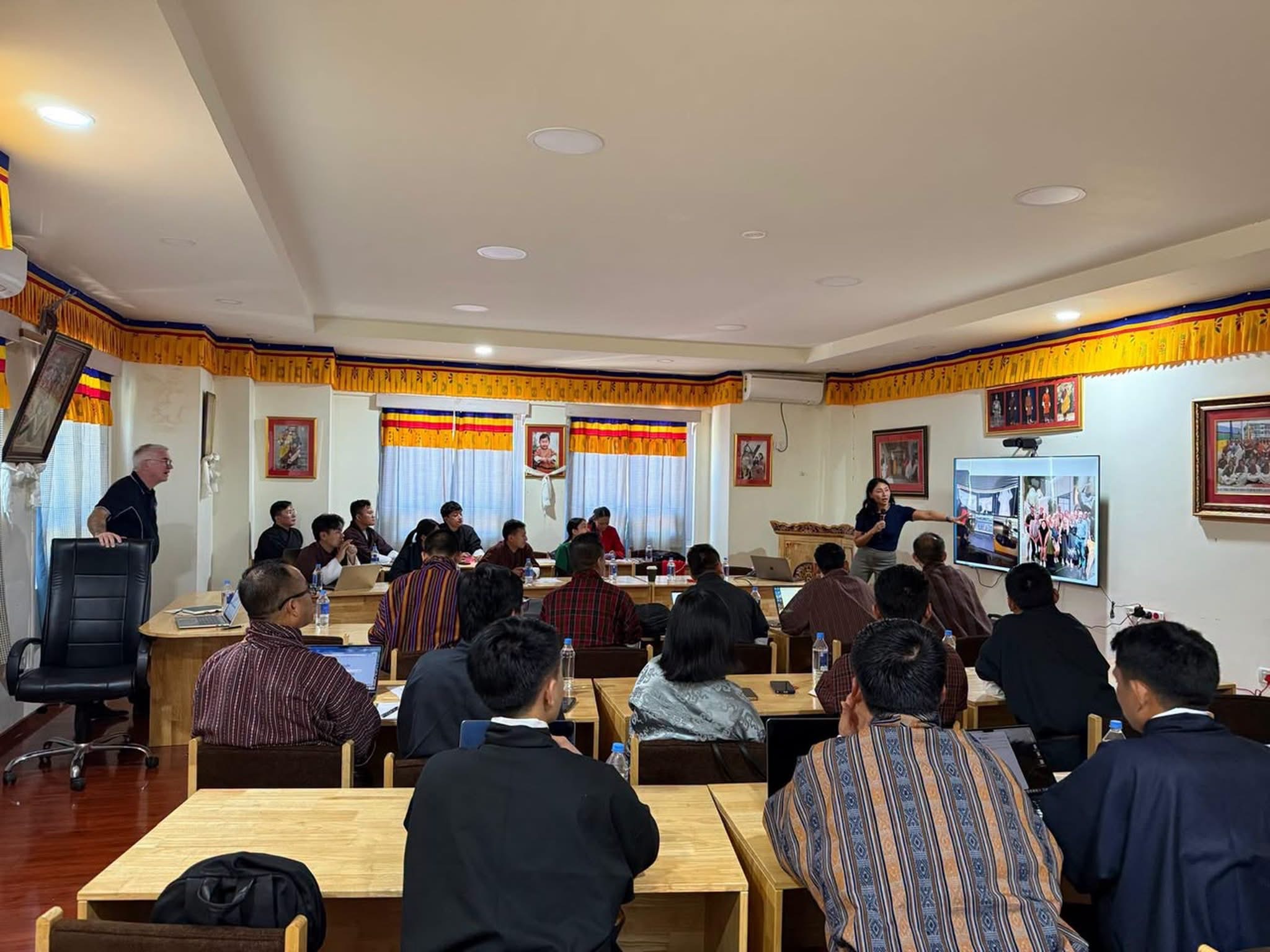
The National Veterinary Hospital (NVH), Department of Livestock, Ministry of Agriculture and Livestock, in collaboration with Vets Beyond Borders VetTrain (VBB), Australia, (sponsored by Crawford Fund) successfully conducted a five-day Radio Imaging and Clinical Pathology Training from 28th September to 2nd October 2026 at NVH, Motithang, Thimphu. The training was conducted as part of the RCSC-approved Continuous Professional Development Programme.
A total of 24 veterinarians and two laboratory technicians from National Centre of Animal Health, National Veterinary Hospital, Regional Veterinary Hospital and Epidemiology Centres (RVH & ECs), Dzongkhag Veterinary Hospitals (DVHs), the College of Natural Resources (CNR), and a JICA volunteer veterinarian attached with NVH attended the training programme. The training aimed to strengthen participants’ practical diagnostic competencies, particularly in ultrasonography, radiography, haematology, cytology and microscopy, and to promote the integration of diagnostic findings into clinical decision-making.
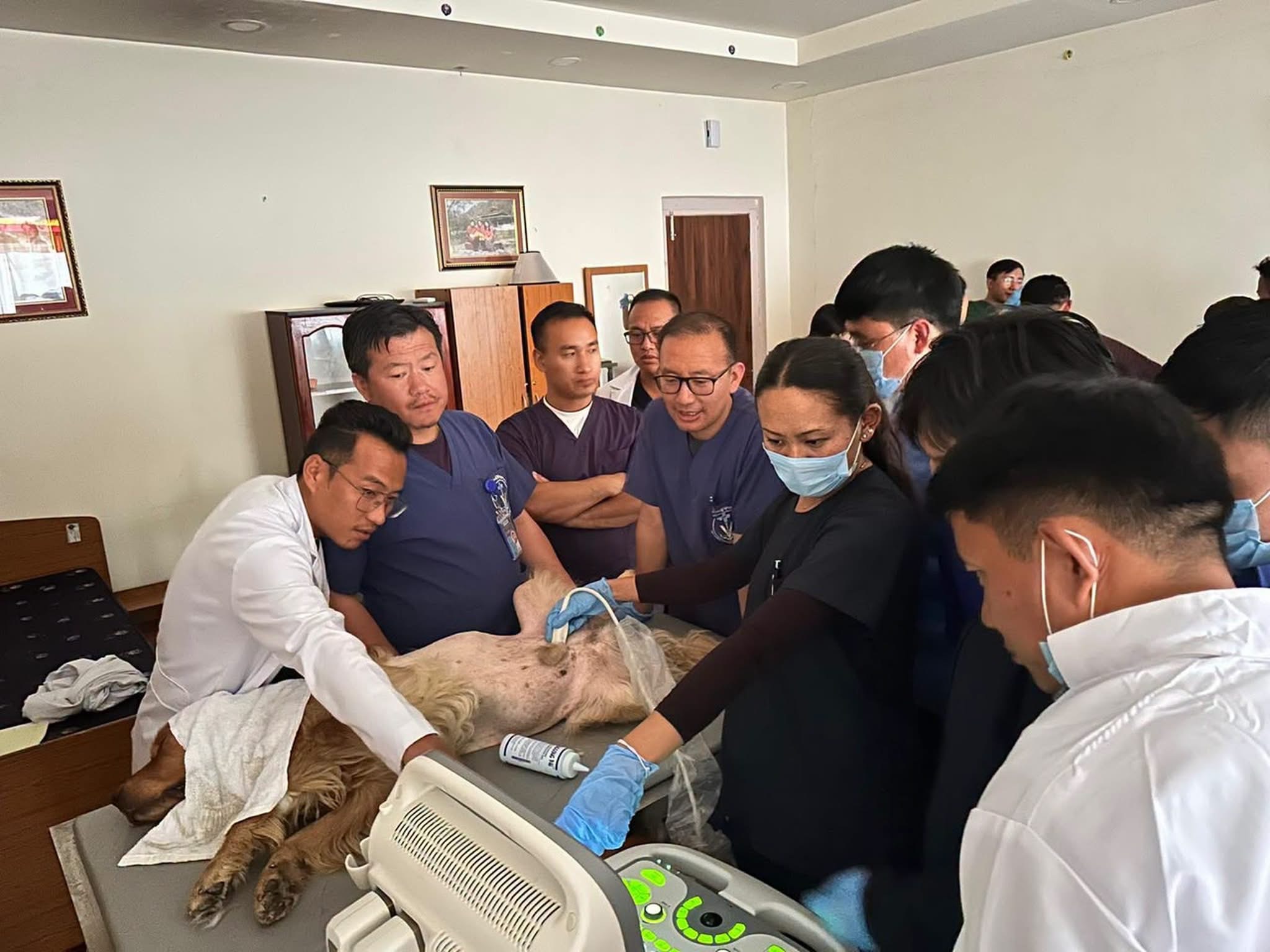
The five-day training programme combined lectures, tutorials, case discussions and hands-on practical sessions. The ultrasonography sessions covered equipment preparation, image optimisation and examination of major abdominal organs and systems, including the urinary and reproductive tracts, gastrointestinal tract, liver, gallbladder, spleen, pancreas, adrenal glands and lymph nodes. Participants also undertook whole-abdominal scanning and ultrasound-guided fine needle aspiration exercises under the guidance of VBB experts.
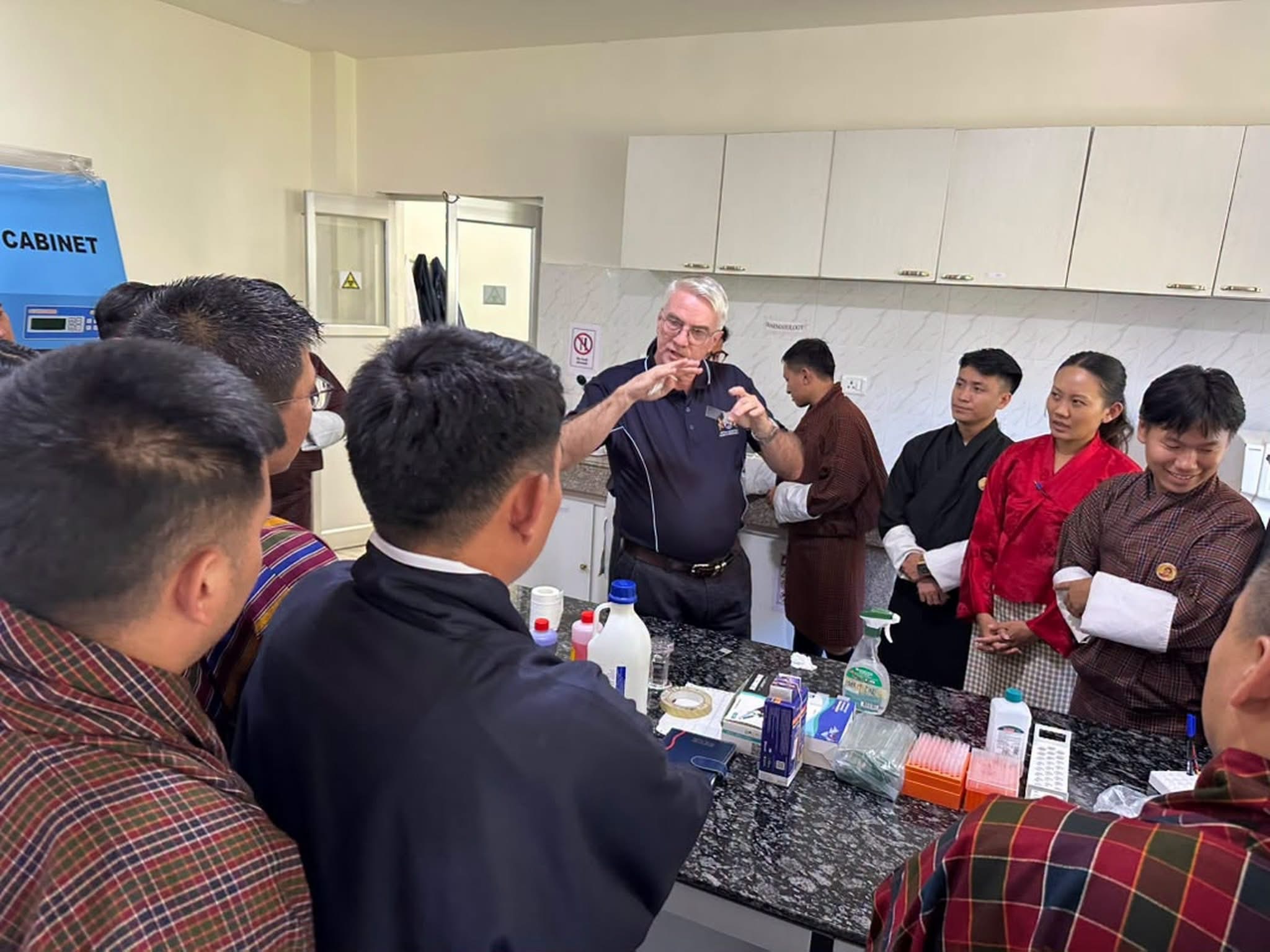
The clinical pathology component covered haematology, with particular emphasis on the assessment and interpretation of anaemia, as well as cytology, microscopy, staining techniques, sample preparation and interpretation of laboratory findings in clinical cases. The programme also included fluid therapy and case-based tutorials, enabling participants to integrate clinical assessment, laboratory results and diagnostic imaging in patient management.
Radiology sessions focused on the systematic interpretation of thoracic radiographs, with participants working through clinical cases to strengthen their ability to identify and interpret thoracic abnormalities. The strong emphasis on practical learning allowed participants to gain direct experience with diagnostic equipment, apply techniques to clinical cases and exchange experiences from veterinary facilities across the country.
This training programme provided an important platform for continuous professional development, technical knowledge exchange and strengthening of veterinary diagnostic capacity in Bhutan. As part of the programme, two microscopes were also handed over to NVH, further enhancing its diagnostic, clinical and training functions.
NVH extends its sincere appreciation to the technical experts from Vets Beyond Borders, Australia, and also the Crawford Fund for their valuable support in facilitating the travel and logistical arrangements for the VBB experts. The Department of Livestock is also acknowledged for securing financial assistance through the EU-PISRAF project to support the participation of local veterinarians and for providing the necessary support for the successful conduct of the training programme. The National Veterinary Hospital (NVH) further acknowledges Nakula Shelter for generously providing dogs for the practical ultrasonography sessions. The Hospital also extends its sincere appreciation to all participating veterinarians and laboratory technicians for their active participation, commitment and valuable contributions, which played an important role in the successful implementation of the training programme.
The training represents an important step towards strengthening the application of diagnostic imaging and clinical pathology in veterinary practice, contributing to timely diagnosis, improved treatment decisions and enhanced quality of veterinary healthcare for animals across Bhutan.